Braid vs Mono vs Fluorocarbon: Which Fishing Line Should You Spool Up?
Recommended picks


Casting Distance and Line Diameter
Picture a surf angler trying to reach a bar two hundred feet out on a small spinning reel. Diameter is the whole battle there, and braid is built for it. A spool like the KastKing NE-KKB-GY-300-20 packs 327 yards of 20 pound test onto a reel that would only hold a fraction of that in mono at the same pound test, because braided fiber strands pack tighter per pound of strength. That extra yardage on the spool means longer casts and more line capacity for a fish that wants to run. Monofilament of equal strength simply takes up more room on the spool, which is why distance anglers gravitate toward braid first and worry about leader material second.
Stretch and How It Changes Your Hookset
Now picture setting the hook on a long cast, past a hundred feet of line already in the water. Monofilament's stretch acts like a shock absorber, which is forgiving on treble-hook baits where a hard hookset can rip hooks free of a fish's mouth. Braided lines listed across this catalog, from the Power 21100200500E to the Sufix 660 series, are built with near zero stretch, so the hookset you feel at the rod tip is close to the hookset happening at the hook. That directness is an advantage for detecting light bites but it also means a braid hookset can be too aggressive for softer-mouthed species without some drag adjustment.
Getting Bit Less: Line Visibility Underwater
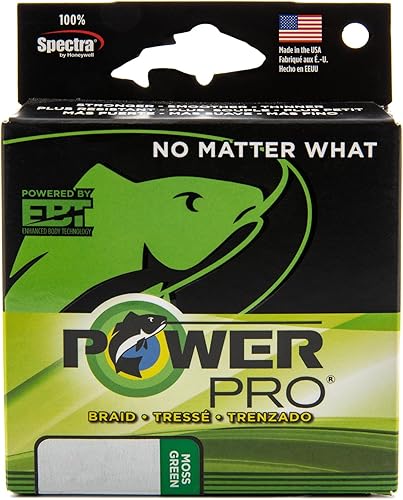
Think about a clear reservoir on a bluebird afternoon, the kind of water where bass have already been caught off the same dock a dozen times that week. This is where fluorocarbon earns its reputation, since its refractive properties make it far less visible underwater than a highly visible braid like the Moss Green or Hi-Vis Yellow colors common across this braided-line lineup. Monofilament sits in between, translucent but still catching some flash. None of the braided spools here are marketed as low-visibility in clear water the way fluorocarbon leader material is, which is exactly why so many braid users tie on a clear leader before the bait.
Fishing Around Structure and Abrasion
Imagine working a bait tight along a rock jetty or a barnacle-covered piling, the kind of spot where fish live and lines die. Several braids in this lineup lean on tougher fiber blends for exactly this scenario, like the Sufix 660 series built from Dyneema and GORE Performance Fiber, or the FINS FNS30WTB-300G made from ultra-high-molecular-weight polyethylene. Those fibers resist fraying better than standard nylon monofilament does when line scrapes across barnacles or rock. Fluorocarbon also holds up well against abrasion and is often added as a leader in these same spots, giving anglers a tough final few feet without switching the whole spool over.
What You're Actually Paying Per Yard
Run the math instead of trusting the price tag alone. The SpiderWire SCS10G-125 runs $9.37 for 125 yards, close to seven and a half cents a yard, while the KastKing NE-KKB-GY-300-20 comes in at $16.99 for 327 yards, closer to five cents a yard. Compare that to the Power SG_B003D93SFO_US at $44.78 for 500 yards, roughly nine cents a yard, and it's clear that heavier line weights and premium fiber blends push the per-yard cost up even within the braid category alone. Monofilament still undercuts all of these on raw cost per yard, which is why budget-conscious anglers spooling several rods often keep at least one on mono.
Floating vs Sinking: How Buoyancy Changes Your Presentation
Consider a topwater bite at first light versus a finesse jig worked slowly along the bottom. Monofilament floats, which helps keep a topwater bait riding high and walking naturally on the surface. Braid also tends to float unless it's been specifically coated to sink, another reason anglers pair it with a fluorocarbon leader to get a bait down. Fluorocarbon sinks on its own, which helps a finesse presentation fall naturally instead of being held up by a floating mainline. Picking the wrong buoyancy for the technique is a quiet way to lose bites without ever noticing why.
Knot Tying and Line Memory
Picture tying on a new bait with cold hands at the ramp before sunrise. Braid's slick, coated surface means a basic clinch knot can slip loose under pressure, so braid anglers lean on knots built to bite into the coating, like a Palomar knot, before trusting a hookset to hold. Monofilament ties easily with basic knots and forgives an imperfect wrap. Fluorocarbon can be stiffer than either one and prone to coiling if it sits on a spool for a long stretch without being fished, so anglers who buy leader material in bulk, like the Seaguar 30SDSG300, tend to cut fresh sections rather than fish line that has been sitting spooled for months.
Why Many Anglers Run a Hybrid Setup
Think about a boat angler switching from open water to a grass line within the same afternoon. Rather than picking one line type for the whole season, a lot of anglers spool braid as backing for its thin diameter and long casts, then tie on several feet of fluorocarbon leader for the final connection to the bait, gaining low visibility and abrasion resistance right where the fish actually sees the line. This hybrid approach shows up in how braid spools in this catalog are marketed, with low-visibility colors like the Sufix 660-220G's Low-Vis Green built to pair naturally with a clear leader rather than replace one.
Common mistakes to avoid
- Tying a standard clinch knot on braid and having it slip loose, because braid's slick coating needs a knot built to bite into it, like a Palomar knot.
- Assuming a higher pound-test braid is automatically thicker line; braid's strength-to-diameter ratio often means a 30 pound braid measures thinner than 10 pound mono.
- Leaving fluorocarbon leader material spooled for months and then wondering why it coils and kinks at the boat instead of laying flat.
- Comparing braid spools by price alone instead of price per yard; a $17 spool of 150 yards can cost more per yard than a $36 spool of 300 yards.
- Fishing gin-clear water on straight, highly visible braid and wondering why bites slow down, instead of adding a fluorocarbon leader for the final few feet.
- Expecting fluorocarbon to float and forgive a hard hookset the way monofilament does, when its properties run closer to sinking and low stretch.
Frequently asked questions
Is braided line actually stronger than monofilament?
Pound-test for pound-test they are rated the same, but braid achieves that strength at a much thinner diameter. A 20 pound braid like the KastKing NE-KKB-GY-300-20 measures far thinner than 20 pound mono, which is why braid casts farther and holds more line capacity on the same reel.
Do I need a fluorocarbon leader if I'm already using braid?
Not always, but many anglers add one because braid is highly visible underwater and mono is only moderately less visible. A short fluorocarbon leader tied to a braid mainline combines braid's thin diameter and casting distance with fluorocarbon's near invisibility right where fish get a close look at the line.
Which line type lasts longest before it needs replacing?
Braid generally holds up over more casts since it does not stretch or absorb water the way monofilament does, though the coating can eventually fray on heavy fiber blends. Fluorocarbon leader material is typically cut fresh per trip or per few trips rather than fished indefinitely off the same spool.
Can fluorocarbon be used as a mainline instead of just a leader?
Yes, some anglers spool fluorocarbon as a full mainline for its low visibility and abrasion resistance, though it costs more per yard than mono and has less stretch, which changes how forgiving a hookset feels. Most of the catalog here is built around braid mainlines rather than full fluorocarbon spools.
Why does braided line cost more per yard than monofilament?
Braid is woven from multiple fiber strands, sometimes blended with materials like Dyneema or Spectra, which costs more to manufacture than extruding a single strand of nylon mono. Heavier line weights and premium fiber blends push the per-yard price up further, as seen across the pricier spools in this braided-line lineup.