XFISHMAN
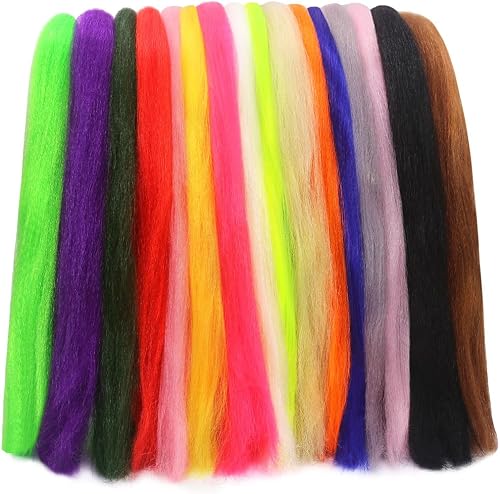
XFISHMAN Fly-Tying-Thread-Kit-6/0-3/0 Fly Tying Supplies Fly Fishing Materials Accessories
$16.99100+ bought last month
View on Amazon
Every fly reel is stamped with a weight range, something like 3wt-5wt or 7wt-9wt, and that number has to overlap with your rod's rating before anything else matters. A rod built for 5wt line loaded onto a reel meant for 9wt line will feel butt-heavy and cast poorly, even if the reel itself is well made. Anglers shopping online often sort by price or finish first and check the weight rating last, which is backward. Pull up the rod's spec sheet, note the line weight, then filter reels to that range. Everything else, arbor size, drag type, material, is a secondary decision that only matters once the weight match is confirmed.
A large arbor reel has a wider spool core, which picks up line faster on retrieve and keeps the fly line from coiling as tightly in storage. Standard and mid-arbor reels are lighter and often cheaper, and they still work fine for calm-water trout fishing where you are not fighting fish that make long runs. The tradeoff shows up in a scenario every angler has faced: a fish turns and swims straight at you, and you need to take up slack line immediately. A large arbor does that in fewer turns of the handle. If you fish moving water or anything that makes sudden runs, the faster retrieve is worth the small weight penalty.
Disc drag reels use friction plates, similar in concept to a car's brake disc, to apply smooth, adjustable resistance across a wide range. Click and pawl reels use a simple spring-loaded pawl against a gear, giving light, mostly fixed resistance with an audible click. For small stream trout under a couple pounds, a click and pawl is traditional, light, and sufficient, since you are mostly just controlling slack rather than fighting a hard-pulling fish. Once you are targeting anything that can peel line on a real run, a disc drag gives you the fine adjustment to slow a fish without snapping light tippet. Check whether the drag is adjustable externally or only internally before buying.
A sealed drag system keeps saltwater, sand, and grit out of the internal drag components, which matters most if you are wading flats or fishing from a boat where spray and dropped gear are routine. Unsealed drags can still handle freshwater trips fine, but repeated saltwater exposure will corrode an unsealed system faster than most anglers expect. Picture a day on the flats where the reel gets dunked, sprayed, and sits in a wet boat bag on the ride home. That is exactly the scenario a sealed drag is built for. If your fishing stays in freshwater lakes and streams, you can save money by skipping this feature entirely.
Backing is the line loaded onto the spool underneath your fly line, and its job is to give a hard-running fish somewhere to go once it strips out all your fly line. Reel manufacturers list backing capacity for each spool size, usually in yards at a given pound test, and it is easy to overlook this number while comparing drag systems and arbor styles. A trout that never leaves the pool in front of you does not need much backing. A fish capable of a fifty-yard run absolutely does. Before buying, check the backing capacity for the reel size you are considering and compare it against how far the species you target is known to run.
Fly reels are built from die-cast aluminum, machined aluminum, or occasionally composite materials, and the difference shows up in both price and durability. Die-cast reels are lighter on the wallet but generally less durable and less corrosion-resistant over years of use. Machined aluminum reels cost more upfront but hold up better to repeated saltwater trips and hard use. Weight also matters for comfort, since a fly outfit is held out in front of you for hours at a time, not braced against a body like a spinning rod. A reel that is too heavy for the rod it is paired with will make a full day of casting noticeably more tiring.
Most fly reels let you switch the retrieve direction between left-hand and right-hand wind, but not all do, so it is worth confirming before you buy rather than after. Traditionally, fly anglers reel with their non-dominant hand so the dominant hand stays on the rod through the whole fight, but plenty of anglers prefer the opposite. If you already fish spinning gear and have a strong preference for which hand reels, carry that preference over. Getting this wrong is not a dealbreaker if the reel is convertible, but it is an extra step you do not want to discover after the reel is already spooled up with line and backing.
Entry-level fly reels are mostly built to hold line and apply basic drag, which is genuinely all a beginner casting to stocked trout needs. Mid-range reels add sealed drag, better arbor design, and machined rather than die-cast construction. Top-tier reels push further into fully sealed, fully machined builds meant to handle saltwater species that can strip a hundred yards of line in one run. The jump in price from entry-level to mid-range typically buys the most noticeable improvement in day-to-day durability. The jump from mid-range to top-tier mostly buys marginal gains that matter only if you are targeting hard-fighting saltwater species regularly.
It needs to overlap, not match exactly. A reel rated 4wt-6wt works fine on a 5wt rod. What you want to avoid is pairing a reel rated for much heavier or lighter line, since that throws off the balance of the whole outfit and makes casting feel off.
It depends on what you fish for. Large arbor reels pick up slack line faster, which matters when a fish runs toward you, and they reduce line coil in storage. For calm-water trout fishing where fish rarely make hard runs, a standard arbor is a reasonable way to save money.
No. Sealed drags exist mainly to keep saltwater, sand, and grit out of the internal mechanism. Freshwater use is much gentler on an unsealed drag, so you can skip this feature and put the savings toward the rod or line instead.
It depends on the species and reel size, since manufacturers list backing capacity in yards for each spool. A trout that stays close rarely needs much. Anything capable of long, fast runs, like bonefish or redfish, needs a reel and backing capacity built for that distance.
Most modern fly reels are convertible between left and right-hand retrieve, but not every model is. Check the product listing or manual before buying if you have a strong preference, since switching is usually simple but not universal across every reel.