How Do You Choose the Right Fishing Pliers?
Recommended picks
- KastKing
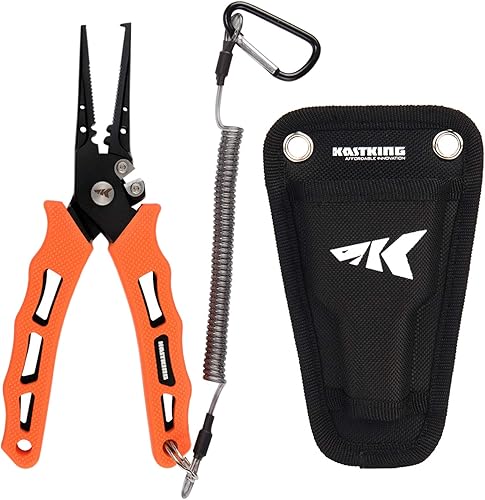
KastKing Cutthroat 7 inch Fishing Split Ring Pliers, 420 Stainless
$22.79400+ bought last monthView on Amazon


Start With How You Actually Fish
A surf angler pulling a circle hook out of a bluefish's jaw needs something different than a bank fisherman popping a small j-hook out of a bluegill's lip. The spec sheets in this category range from lightweight 4 gram plastic disgorgers priced around $5 up to full metal pliers pushing $50, and that spread exists because the jobs are genuinely different. Before comparing brands, figure out whether you need a dedicated hook remover, a general-purpose plier for hooks and split rings, or a heavier tool built for line cutting and crimping. That single decision narrows the field faster than any spec comparison.
Material: Stainless Steel, Aluminum, or Carbon Steel
Stainless steel shows up most often in this lineup, from the Texas SR-5 at $20.11 to the KastKing Cutthroat at $22.79, and it holds an edge on cutting jaws while resisting rust in most conditions. Aluminum bodies, like the BUBBA 1109761 at $32.39 or the Booms Fishing AlumaStream-style models, cut weight for anglers who carry pliers on a belt all day. Carbon steel appears on budget picks such as the Booms BFFTF0309G10 at $15.99, and it works fine in freshwater but needs more attention if it sees regular saltwater spray.
Jaw Style: Split Ring, Needle Nose, or Combination
Split ring pliers, like the Texas SR-5 or the KastKing KKSDP-KTATLSPLR-7SRSSSDP-KK at $28.79, have a fine hooked tip built to pry open split rings for swapping hooks and lures. Needle nose and straight jaw designs, such as the Booms HR-hook-remover-1 at $8.99, reach further into a fish's mouth for deep hooksets. Some models split the difference with a combination jaw that offers a shorter hook, a wider gap, and a cutter in one tool. If you spend more time rigging lures than removing hooks, prioritize split ring capability; if hook removal is the daily task, a longer needle nose wins.
Cutting Power: Tungsten Carbide vs Standard Steel
Anglers who cut braided line regularly should look for tungsten carbide inserts, found on models like the KastKing Cutthroat at $22.79 with 6,420 reviews and the danco SS75-AMZ-01 at $31.99. Carbide holds a sharper edge against braid and wire leader than plain stainless jaws, and it tends to stay sharp through more cuts before the edge rolls over. Standard steel cutters, common on cheaper models under $15, will cut monofilament and light fluorocarbon fine but dull faster on heavier braid. If your tackle box leans toward 30 pound braid or wire, the carbide upgrade tends to pay for itself in fewer replaced pliers.
Size and Weight for All-Day Carry
Listed weights in this category swing from a few grams for small disgorgers to over 0.3 pounds for full-size metal pliers. The Booms fish-hook-remover-R2-10in weighs 3.04 ounces at a 10 inch length, while heavier aluminum models like the Gambler ALU75-AMZ-020 at 5.4 ounces sit closer to what a kayak or wading angler wants clipped to a vest. A longer plier, generally 9 to 11 inches, gives more leverage on big fish but adds bulk. Shorter 6 to 7 inch pliers fit tackle bags and pockets better for anglers who prioritize convenience over reach.
Corrosion Resistance for Saltwater Use
Saltwater exposure is the fastest way to ruin a pair of pliers that isn't built for it. Listings marketed for saltwater, such as the RapalaSalt SACP8 at $13.52 and the HOOK-EZE titanium model at $39.99, tend to use 420 or 421 stainless, titanium, or coated aluminum specifically to resist salt corrosion. Freshwater-only pliers often use plain carbon steel, which is lighter on cost but can pit and rust if it ever gets dunked in brackish or salt water. Check the material line in the listing, not just the marketing copy, before committing.
Price Tiers and What You Get
This category spans from budget hook removers under $6, like the Fish Hook Remover Tool 4 Pack at $5.25, to premium multitools near $50, such as the Line LCPLRGN at $49.99 with forged aluminum, stainless steel, and ceramic components. Mid-range pliers between $15 and $25, including the Booms BFFPX0178B10 at $19.99 with 2,800 reviews and the ZACX model at $23.99 with nearly 16,000 reviews, cover most anglers' needs with a sheath and lanyard included. Spending more usually buys carbide cutters, corrosion-rated materials, or a spring-loaded return action rather than raw strength.
Extras That Change Daily Use
A sheath keeps a sharp-jawed plier from cutting through a tackle bag, and a coiled lanyard means it stays clipped to you instead of sinking to the bottom of the lake. Several listings bundle both, including the CS63-2 at $13.99 and the WMOSHR1 at $7.98 with a coiled lanyard. Fish gripper attachments, seen on models like the 2 Fish Gripper at $14.99, add a way to hold a fish steady while you work the hook. None of these extras replace good jaws or solid material, but they reduce the number of separate tools you need to carry.
Common mistakes to avoid
- Buying carbon steel pliers for saltwater use and being surprised when they rust or seize within a season.
- Choosing a plier based on length alone without checking whether the jaw is split ring, needle nose, or combination.
- Skipping the lanyard and sheath, then losing an expensive pair overboard or dulling the jaws in a tackle bag.
- Assuming every stainless steel listing resists saltwater equally well when grade and coating vary by model.
- Overpaying for tungsten carbide cutters when the actual use case is light monofilament that any standard jaw handles fine.
- Ignoring review volume and rating pattern, which often signals reliability better than the spec sheet alone.
Frequently asked questions
Do I need tungsten carbide cutters for fishing pliers?
Only if you regularly cut braided line or wire leader. Carbide inserts, found on models like the KastKing Cutthroat at $22.79, hold an edge longer against tough materials. For monofilament or occasional use, a standard stainless steel jaw at a lower price point handles the job fine.
What size fishing pliers should I get?
Most anglers do well with a 6 to 7.5 inch plier for everyday hook and split ring work. Longer 9 to 11 inch models, like the Booms fish-hook-remover-R2-10in, add reach and leverage for bigger fish but take up more space in a tackle bag or on a belt.
Are aluminum fishing pliers as durable as stainless steel?
Aluminum bodies cut weight and often resist corrosion well, as seen in models like the BUBBA 1109761, but the cutting jaws on most aluminum pliers still use inserted steel or carbide for durability. The aluminum handles the frame; the insert handles the cutting.
What is the difference between split ring and needle nose pliers?
Split ring pliers have a fine hooked tip designed to pry open metal rings when swapping hooks or lures. Needle nose or straight jaw pliers are built to reach further into a fish's mouth for hook removal. Some anglers carry both; combination designs try to cover each role at once.
Is a lanyard or sheath worth paying extra for?
Yes, for most anglers. A lanyard keeps pliers clipped to you instead of lost overboard, and a sheath protects both the jaws and whatever else is in your bag. Several listings, like the CS63-2 and WMOSHR1, include both at no added cost over comparable bare pliers.