What Is Terminal Tackle, and How Do You Pick the Right Sinker?
Recommended picks
- BLUEWING
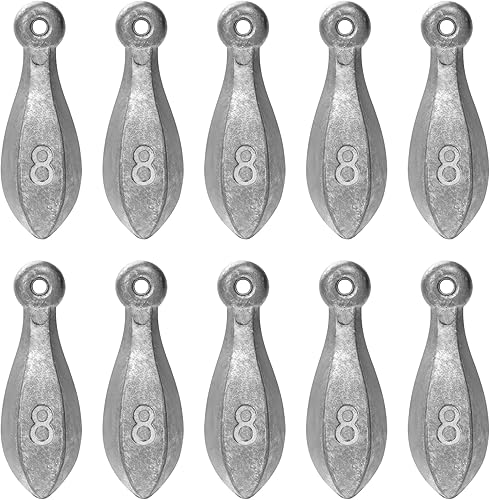
BLUEWING Bank Sinker 1LB/2LB/3LB/5LB/6LB Box Fishing Weights Saltwater Bullet Lead
$39.99100+ bought last monthView on Amazon


What Falls Under Terminal Tackle
Picture tying on a hook, clipping a swivel above it, then pinching a split shot onto the line to get a jig down past a drop-off. Everything you touch after the reel and rod blank counts as terminal tackle: hooks, sinkers or weights, swivels, snaps, leaders and bobbers. None of it looks impressive on a shelf, but it decides whether a bait sinks, drifts, or hangs up on the bottom. Anglers spend hours comparing rod action and reel gear ratios, then grab whatever sinker sits closest to the register. That backwards priority is where tangled lines and lost rigs usually start, since the weight clipped on determines depth, drift speed and how the bait moves near cover.
Sinker Material: Lead, Tungsten, Brass, Steel and Tin
Lead dominates the shelf because it is cheap and dense enough for most jobs, and packs like the Lindy CNS120 run $12.99 for six 3/4 oz sinkers. Tungsten sinkers such as the Reaction 4C-9ONO-GPGV cost more, $19.99 for eight 1/8 oz weights, in exchange for a smaller, harder profile at the same weight. Brass shows up in packs like the Booms BFTTCRR12K50 at $12.99 for five half-ounce weights, and tin and stainless steel turn up in specialty items such as the Loon Tin Weights and the Weight 417 clip. None of these materials is objectively best. The choice comes down to how much density and hardness a given rig actually needs versus what the buyer is willing to pay per piece.
Matching Shape to the Water: Split Shot, Egg, Bullet, Bank and Pyramid
A wading angler pinching split shot onto light line is solving a different problem than a surf caster trying to hold bottom against a rip current. Split shot, like the Joyiii 205-piece pack at $8.99, clips on and off for quick depth adjustments on finesse presentations. Egg and slip sinkers, such as the Egg BlDY-PJ26 81-piece set at $16.99, slide freely so a fish can pick up bait without feeling resistance. Bullet or worm weights, like the Bullet KYZY-WORM WEIGHTS 29-piece kit at $9.99, peg against the hook for weedless soft plastics. Pyramid and bank sinkers, including the BLUEWING Bank Sinker box at $39.99, dig in or hold position in current for surf and river fishing.
Reading the Weight Range Printed on the Package
Sinker weight is printed as a fraction of an ounce for finesse work and whole ounces or pounds for surf and deep water. The Reaction RT-NW-1-32 tungsten nail weights come in at 1/32 oz, twenty-five to a pack for $18.98, meant for barely-there weight on wacky-rigged worms. At the other end, the Deep Drop Fishing Lead Weight lists sizes up to 2 lb for $31.99, built for holding bait on the bottom in deep saltwater. Neither number means anything on its own. The right weight is whatever keeps a bait in contact with the strike zone against the current and depth in front of you, and that changes trip to trip, not brand to brand.
Doing the Per-Piece Math Before You Buy
Sinkers get lost constantly, so cost per piece matters more than the sticker price on the bag. The Joyiii 205-piece lead split shot pack at $8.99 works out to about 4 cents per sinker, and the SANWEAL 120-piece pack at $5.19 lands in the same range. Compare that to the Reaction 4C-9ONO-GPGV tungsten pack, $19.99 for eight pieces, close to $2.50 each. That premium can make sense fishing heavy cover where a smaller, denser weight improves feel and hang-up resistance. It is a poor trade for bank fishing or teaching a kid to cast, where losing a dozen sinkers in an afternoon is normal and the cheap lead bag pays for itself many times over.
Swivels, Snaps and Leaders: The Rest of the Terminal Rig
Sinkers get most of the attention, but a swivel above the leader keeps a spinning bait or current from twisting the mainline into a mess, and a snap swivel lets an angler switch lures without re-tying every cast. A short length of leader material, tied or looped between the swivel and the hook, absorbs abrasion from rocks, oyster beds or a fish's teeth before it ever reaches the line spooled on the reel. None of this hardware is glamorous, and none of it shows up in a highlight reel, but skip a swivel on a rig prone to twist or leave out a leader near structure, and the line takes the damage that piece was there to prevent.
What Rating Volume Actually Tells You
A high star rating means little without enough reviews behind it. The SANWEAL 120-piece sinker pack sits at 4.5 stars across 2,000 reviews with 4,000+ bought in the past month, a pattern that reflects steady, repeat use across a lot of buyers. Compare that to a listing like the Pyramid Sinkers Assorted Weights at a perfect 5.0 stars but only 10 reviews, a sample too small to draw any real conclusion from. Watch the bought-last-month figure too. Several sinker listings with decent ratings, such as the Dr.Fish DFTWoB3#100 at 4.3 stars across 358 reviews, show 0+ bought last month, which can point to a listing that has gone stale even if the rating itself still looks fine.
Common Rig Setups Terminal Tackle Solves
A Carolina rig runs an egg or bullet sinker above a swivel, then a leader down to the hook, letting the weight bounce bottom while the bait floats free behind it. A Texas rig pegs a bullet or worm weight, like the Bullet KYZY-WORM WEIGHTS kit, directly against the hook eye so a soft plastic can be dragged through brush without snagging. A drop shot setup flips that order, tying the hook above the line and a small weight, such as the Drop Shot Fishing Weights 10-pack at $8.99, below it for a bait that hovers just off the bottom. Each rig exists to solve a specific bottom, cover or presentation problem, and the sinker shape chosen is what makes the rig work as intended.
Common mistakes to avoid
- Buying sinkers by weight alone without matching the shape to the bottom type, so pyramid weights roll in mud or bullet weights snag on rock.
- Ignoring cost per piece on bulk multipacks and paying several times more per sinker without a clear reason.
- Choosing tungsten for casual bank fishing where sinkers are lost often, spending premium money on a cost that adds up fast.
- Trusting a perfect star rating built on a handful of reviews instead of checking how many reviews back it up.
- Skipping a swivel between mainline and leader on a rig prone to line twist.
- Overlooking a 0+ bought-last-month figure, a sign a listing may be stale even when its rating still looks good.
Frequently asked questions
What is terminal tackle in fishing?
Terminal tackle is the gear tied directly to the working end of the line, separate from the rod and reel. That covers hooks, sinkers or weights, swivels, snaps, leaders and bobbers, the small pieces that determine how a bait sinks, drifts and presents itself to a fish.
Is tungsten worth the extra cost over lead sinkers?
It depends on the situation. Tungsten packs like the Reaction 4C-9ONO-GPGV run roughly five times the per-piece cost of a bulk lead pack such as the Joyiii 205-count bag. That premium buys a smaller, denser profile useful in heavy cover, but it is money wasted on rigs that get lost often.
What is the difference between a split shot and a bullet weight?
Split shot, like the Joyiii 205-piece pack, pinches directly onto the line and comes off just as easily, good for quick depth changes on a finesse rig. A bullet or worm weight threads onto the line ahead of the hook and pegs against it, mainly for Texas-rigging soft plastics through cover.
How much weight should I add to a rig?
Match the weight to depth and current rather than a brand or a habit. Facts here range from 1/32 oz tungsten nail weights meant for barely-there wacky rigs up to 2 lb lead weights built for holding bottom in deep saltwater. Use the lightest weight that still keeps the bait in the strike zone.
Why does the price per sinker vary so much between packs?
Material and pack size drive most of the difference. Bulk lead packs such as the SANWEAL 120-piece bag at $5.19 work out to a few cents each, while small tungsten packs like the Reaction 4C-9ONO-GPGV land closer to $2.50 per piece for the added density and smaller size.